


Electricians’ Scrap: What to Keep Separate and Why Cable Is Worth More Than You Think
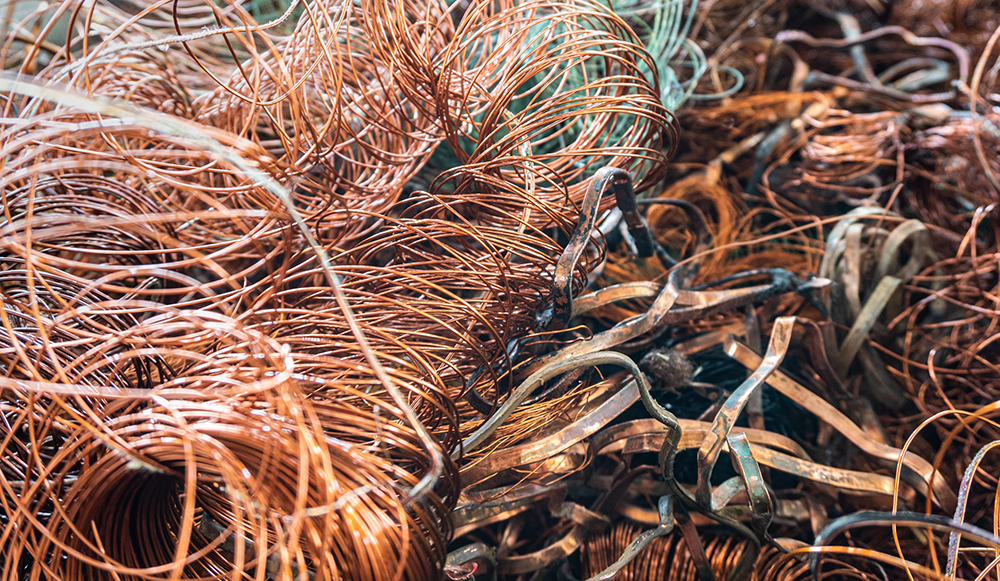
If you’re an electrician, you’ll know how fast the scrap builds up. A rewire, a consumer unit upgrade, a commercial strip-out or even a week of small domestic jobs will leave you with a van full of offcuts, old fittings and lengths of cable you’ve pulled out of walls and ceilings. The temptation is to chuck it all in one bag and bring it in when the van gets too full.
Here at Taroni’s of Birmingham, we see electrical scrap coming through the gate every single day, and the biggest mistake we see is good copper getting lost in a mixed pile. Like our guide to plumbing scrap, this one will help you sort what’s worth separating from what isn’t, so you get the best return on every load.
Start with the cable, because that’s where the value is
The copper inside your cable is the most valuable thing in your scrap pile, and the way you present it makes a real difference to how it’s graded.
The first thing to understand is that cable is graded on its copper content. Thick, single-core cable with a thin layer of insulation is mostly copper by weight, so it grades well. Thin flex, alarm cable and data cable have a lot of plastic and very little metal, so they sit at the bottom of the scale. Standard twin and earth from a domestic rewire sits somewhere in the middle.
The easiest win is to keep different types of cable separate rather than tangling them all together:
- Heavy single-core and tails (meter tails, sub-main cable) in one pile
- Twin and earth and general domestic cable in another
- Flex, extension leads and appliance cable kept apart
- Data, telephone and alarm cable on their own
A load of mixed cable can only be graded at the lowest common denominator. Sorted cable can be graded on its own merits.
Should you strip it?
This is the question we get asked more than any other. Bare, clean copper is worth more per kilo than insulated cable, so in theory stripping always pays. In practice, it depends on the cable.
For thick cable, where you can run a stripping tool along it and pull out a solid chunk of copper in a few seconds, stripping is usually worth the effort. For thin cable, the time it takes to recover a few grams of copper rarely adds up, and most electricians are better off bringing it in as it is and getting on with paid work.
One thing we need to be absolutely clear on: never burn cable to get the insulation off. It’s illegal, it’s dangerous, and burnt copper is contaminated and will be graded accordingly. Any reputable yard will treat burnt cable with suspicion, and rightly so.
Armoured cable (SWA)
Steel wire armoured cable turns up on a lot of commercial and outdoor jobs, and people often assume it’s not worth bringing in. It is, but it needs to be kept separate from your other cable. The steel armour means the overall copper content is lower than ordinary cable, so it’s graded differently. Also check whether the core is copper or aluminium before you assume: some larger SWA cables have aluminium conductors, which are still recyclable but sit in a different bracket.
Consumer units, busbars and the brass you’re probably overlooking
Old consumer units and distribution boards are worth a second look before they go in the steel pile. The enclosure itself is usually steel (or plastic on newer units), but the busbars inside are copper or brass and can be unscrewed in a minute or two. The same goes for the neutral and earth bars.
Brass is the metal electricians overlook most. Old sockets and switches, terminal blocks, cable glands, earth clamps and the brass fittings off conduit all add up. Brass isn’t magnetic and feels heavier than it looks, and it’s worth keeping in its own container rather than letting it disappear into a bag of mixed bits.
Fluorescent fittings and other lighting
Commercial strip-outs often produce dozens of old fluorescent fittings. The steel bodies are recyclable as ferrous scrap, and older fittings with magnetic ballasts contain copper windings that are worth removing if you have the time. The tubes themselves are not scrap metal. They contain mercury and need to go through a proper WEEE route, so please keep them out of your metal pile entirely.
Tray, trunking and conduit
Steel cable tray, trunking and conduit are all straightforward ferrous scrap. If you’ve stripped out aluminium tray or trunking, keep it separate, as aluminium is non-ferrous and graded on its own. A magnet is the quick test: if it sticks, it’s steel.
What to keep out of your scrap pile
Electrical scrap often comes with bits attached that slow sorting down and drag the grade of the whole load:
- Plastic trunking, back boxes and pattress boxes
- Fluorescent tubes, LED lamps and bulbs
- Smoke alarms and anything with a battery inside
- Bags of general site waste, plaster and packaging
Ten minutes keeping this out of your metal means clearer grading and a better price.
A simple system for the van
You don’t need to overthink it. Four or five containers in the back of the van will do the job:
- One for heavy cable and tails
- One for twin and earth and general cable
- One for brass (busbars, glands, terminals, old fittings)
- One for steel (tray, trunking, enclosures, fittings)
- Keep SWA and any aluminium separate if you have them
Even that basic level of separation will make a noticeable difference over a year of jobs.
Bring it in to Taroni’s and we’ll help you grade it
If you’re not sure what you’ve got, don’t worry. Bring it to our Birmingham scrap yard on William Henry Street in Aston and we’ll identify it, explain what’s worth separating for next time and make sure it’s recycled properly. We work with electricians and electrical contractors across Birmingham and the Midlands, and if you’re bringing scrap in regularly, it’s worth setting up a trade account so you can be paid straight into the business by BACS.
Give us a call on 0121 333 3330 or just drop in. Responsible Metal Recycling since 1952.